

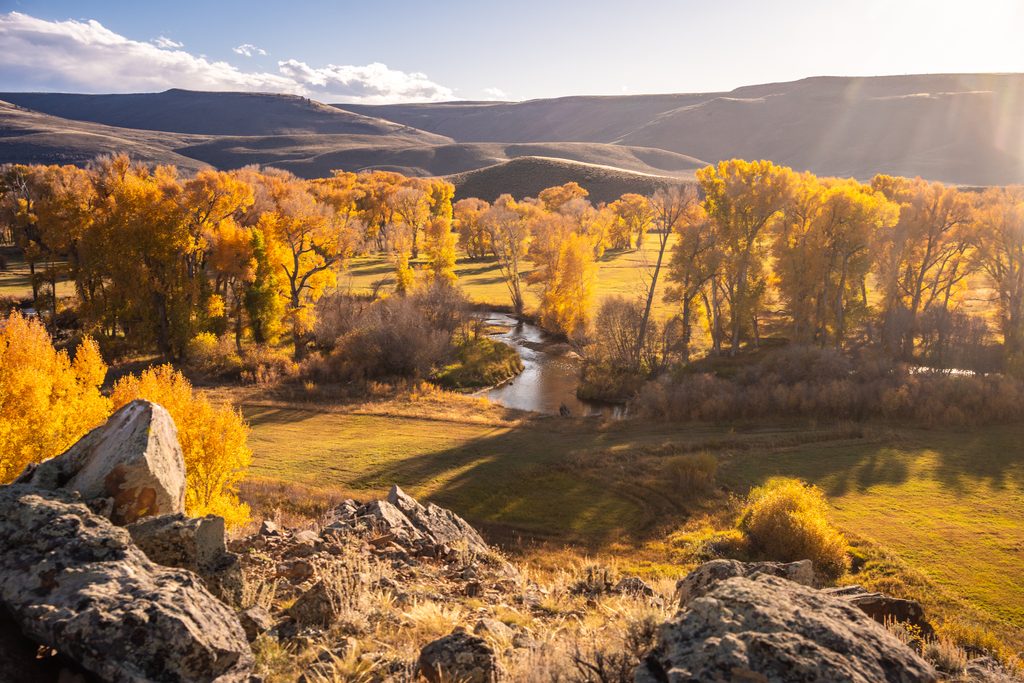
Few tools have had a greater influence on the conservation of Western landscapes than the conservation easement. For decades, conservation easements have provided landowners with a tool to protect the rural character and unique wild nature of their properties, while simultaneously retaining ownership and continuing the ranching, farming, and recreational pursuits that define its use. Storied and rife with change, the conservation easement system has faced both significant progress and notable regulatory headwinds throughout its history. As the prevalence of these easements has expanded, so too has the scrutiny surrounding them. Changes in tax policy, appraisal standards, state oversight, and federal rulemaking have continually reshaped how easements are structured and evaluated. For buyers, sellers, and landowners considering a conservation easement in any capacity, understanding this evolution is critical.
Conservation easements are an important and effective tool for preserving the character, agricultural productivity, and natural values of the Western landscape. However, these easements are not universally appropriate for every property, nor for every landowner. Because an easement permanently alters a property’s future, the decision to place one should be approached with careful consideration and comprehensive understanding of both near- and long-term implications. Thoughtful preparation and negotiation are essential to ensure that the easement appropriately protects the property while still preserving the landowner’s ability to use, improve, and ultimately transfer it as intended. CLC’s extensive experience representing the acquisition, management, and disposition of easement-conserved ranches throughout the Rocky Mountain West allows us to serve as a trusted advisor for clients evaluating conservation easements as part of their land-investment strategy. This month’s Field Note dives into the conservation easement landscape of today, explores how we got there, and examines what the future of Western rural land conservation may hold.
Section One: Background and Context
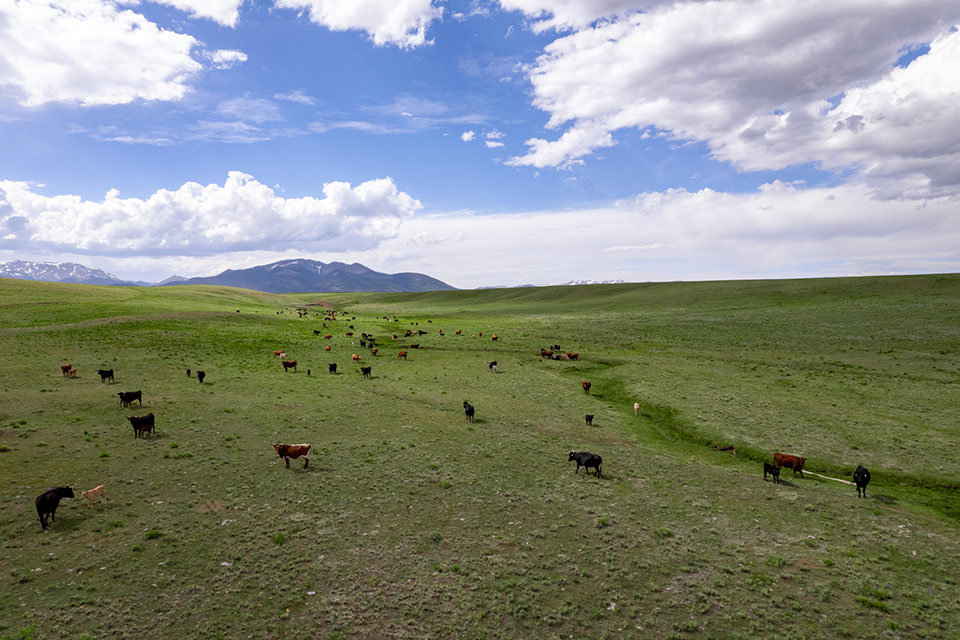
At its most basic level, a conservation easement is a voluntary legal agreement that restricts certain uses of the landowner’s property in order to protect its conservation values– a set of agricultural, ecological, wildlife and/or open space characteristics unique to the property and deemed worthy of formal protection. Under the easement, the landowner continues to own the property but forgoes specified building and development rights- often things like subdivision or future construction. Every easement differs in terms of its exact limitations, which are negotiable between the parties creating the easement. Easements typically allow the property to continue its historic operations, including agriculture, livestock production, recreation, or other traditionally reasonable uses. To incentivize the placement of these easements, landowners are typically offered some form of compensation- often in the form of tax credits or deductions. Sometimes, landowners may receive cash consideration for an easement if the property’s protection is considered extremely valuable.
A conservation easement generally involves three primary parties: the landowner (grantor), the conservation organization(s) (grantee), and the government. The landowner determines which rights they are willing to restrict and ultimately signs over the easement. The conservation organization maintains the easement and assumes responsibility for verifying that its terms are upheld. The government, at both State and Federal levels, provides the regulatory framework and incentives for landowners to pursue these easements. When enacted appropriately, a conservation easement protects a property from future development and ensures that its natural values remain enshrined, while allowing private ownership and uses aligned with its heritage to continue undisturbed. Critically, these easements are granted in perpetuity– once placed, they run with the land forever, regardless of changes in ownership.
Section Two: A Brief History of Conservation Easements
Conservation easements span a longer history than most people may think. As University of Utah law professor and leading expert in conservation easements, Nancy McLaughlin, explains in her introduction to the topic, the concept stems from the 1930-40s when the National Park Service bought scenic easements along the Blue Ridge Parkway to protect iconic viewsheds without buying the land outright. Journalist William Whyte coined the term conservation easement in 1959, in context of a study for the Urban Land Institute. The IRS first recognized a deduction for donated easements in a 1964 revenue ruling, which Congress later made permanent in 1980 under Internal Revenue Code Section 170(h). That section still sets out the following core easement qualifications today. The easement must be perpetual, be granted to a qualified organization, and must serve a conservation purpose. The 1981 Uniform Conservation Easement Act gave states a template for enforcing easements, and Colorado had already passed its own statute in 1976. Land trusts grew alongside the law, from the Land Trust Alliance in 1982 to ag-focused groups like the Colorado Cattlemen’s Agricultural Land Trust in the 1990s. In 1999, according to the state’s Division of Conservation, Colorado created a state income tax credit for donated easements, setting the stage for what came next.
The 2000s brought widespread adoption of easements, and plenty of abuse. Donations surged, as did artificially-inflated appraisals and easements on properties with little conservation value; problems the Colorado State Auditor dug into during a 2012 audit. The IRS increased scrutiny in 2004 with a notice warning it would disallow and penalize improper deductions, and began challenging Colorado donations. By 2009, Senators Mark Udall and Michael Bennet were writing to the IRS asking the agency to work with the state to improve the conservation easement system, instead of against it. The State took proactive action with HB 08-1353, which required a state application for every credit, state certification of easement holders, and state-certified review of each and every conservation easement appraisal. It also created the Conservation Easement Oversight Commission. Under state law, Colorado appraisals must now come from a state-certified general appraiser. Today, Colorado’s Department of Regulatory Agency’s Division of Conservation oversees the program. Per its published guidance, State-issued credits cap at $5 million per conservation easement donation, issued in increments of up to $1.5 million per year. Federally, donors can deduct up to 50% of adjusted gross income, or 100% for qualifying farmers and ranchers, with a 15-year carryforward- rules Congress made permanent in 2015.
Section Three: Changes on the Horizon
In recent years, both Federal and State governmental agencies have continued to enact additional measures to curb the potential abuse of conservation easement tax credit programs. Federally, these measures have focused on “syndicated” conservation easements, or easements in which a promoter pools multiple investors’ funds to purchase a property specifically for the purpose of reaping CE tax shelter benefits. While not all syndicated CE’s are illegitimate, nefarious actors have often combined these syndicated acquisitions with exaggerated appraisals to create abusive tax-avoidance schemes.
Here’s a basic example:
Our promoter locates a ranch property which can be purchased for $3,000,000. He sources Investor A, B, and C, each of whom commit $1,000,000 to acquire the deal. Immediately after acquisition, the promoter hires an appraiser who creates a willfully false appraisal stating that the ranch is worth $10,000,000 at its highest and best use, and that placing a conservation easement on the ranch would diminish its value by $9,000,000 (90%). The easement is placed, and Investors A, B, and C each claim $3,000,000 (their share of the $9,000,000 in diminished value) in federal tax deductions, even though each only paid $1,000,000 into the deal to begin with.
Federal efforts to mitigate these syndicated CE abuses have been ongoing since at least 2016, ranging from IRS mandatory disclosures to blanket settlement offerings for litigated CEs. Syndicated CEs even made the IRS’ “Dirty Dozen” public scam awareness list in 2019. Notably, Congress’ SECURE 2.0 Act of 2022 imposed set limits on syndicated conservation easement deductions, generally capping deductions at 2.5x the owners’ sum basis. Despite all those efforts, tax-abusive syndicated CEs have remained a major issue, with over 1,100 unresolved cases still waiting in IRS Tax Court.
That brings us to 2026. In May, the IRS opted to offer another blanket settlement to syndicated CEs currently facing litigation. However, on August 19th the IRS rolled back this latest settlement offer, opting instead to create an entirely new office (dubbed the Office of Conservation Easements) tasked with centralizing and coordinating CE-related operations. After many years of what could be viewed as lesser efforts, the creation of this office signals an increase in IRS seriousness when it comes to analyzing and litigating CE matters. While this escalation sounds daunting, remember that IRS enforcement remains focused on abusive syndicated CEs- changes are not slated to impact typical conservation easements, and the agency has even gone so far as to note “the important role conservation and historic preservation easements can play.” Ultimately, this Federal clampdown on bad-faith syndications actually benefits the typical easement seeker by ensuring that tax incentives remain available for legitimate easements.
Meanwhile, updates to Colorado’s state-level conservation easement program have taken place as well. House Bill 1230, passed in June of this year with overwhelming bipartisan support, extends the State’s CE tax credit program through 2036 and signals a continued interest in providing landowners meaningful incentives to conserve their properties. While HB1230 slightly reduces the individual tax credit available to landowners (from 90% to 80% of donated value), it also increased the annual cap on overall credit allowance (to $50M annually). Whereas the aforementioned Federal changes focus on mitigating malicious easements, this State legislation is designed to continue and expand opportunity for legitimate conservation easement seekers.
Colorado’s conservation easement system is somewhat distinctive among its neighboring Western states because of the scale and structure of its state income tax credit. Though New Mexico also offers a CE tax credit, Colorado’s program provides a substantially larger potential incentive. Not only that, but Colorado has also allowed for the creation of a secondary market in which tax credits can be sold to other taxpayers, allowing these credits to be converted to cash. Montana and Wyoming, by comparison, do not offer a state income tax credit for conservation easement incentivization. This has made Colorado’s conservation easement system particularly appealing for landowners, while also accounting for the higher degree of state oversight surrounding appraisals and compliance.
Section Four: Impacts and Future
In general, additional government regulation and oversight is rarely positive when it comes to tax programs such as the conservation easement model. It adds cost and time to a process that already asks a lot of participating landowners. However, conservation easements will only last as an enduring tool if the public trusts them to be legitimate. The reforms of the last two decades have largely targeted inflated values, paper deductions that lack legitimate backing, and easements that protect very little in terms of actual conservation value. None of this changes the path for a landowner doing things right: working with a certified land trust, hiring a qualified appraiser, and applying within appropriate State and Federal guidelines. With a strong Colorado state credit slated to last for years to come, and continued incentivization and praise from the Fed, this remains a great environment for landowners to pursue legitimate conservation easements.
As the future of the conservation easements is considered, and additional regulations are enacted to curb malfeasance, it’s worth revisiting how we value these easements themselves. Throughout their history, we’ve valued conservation easements by what they take away. Under IRS regulations, an appraiser values the eased property before and after the easement, and the difference in values is the assumed donation. This system inherently rewards properties with high development potential- for example, a property near a growing town will generate a high “before” number, and therefore a large donation. A remote ranch with intact habitat, senior water rights, and a working cattle operation may generate a smaller donation, even if it protects a wider array of conservation values.
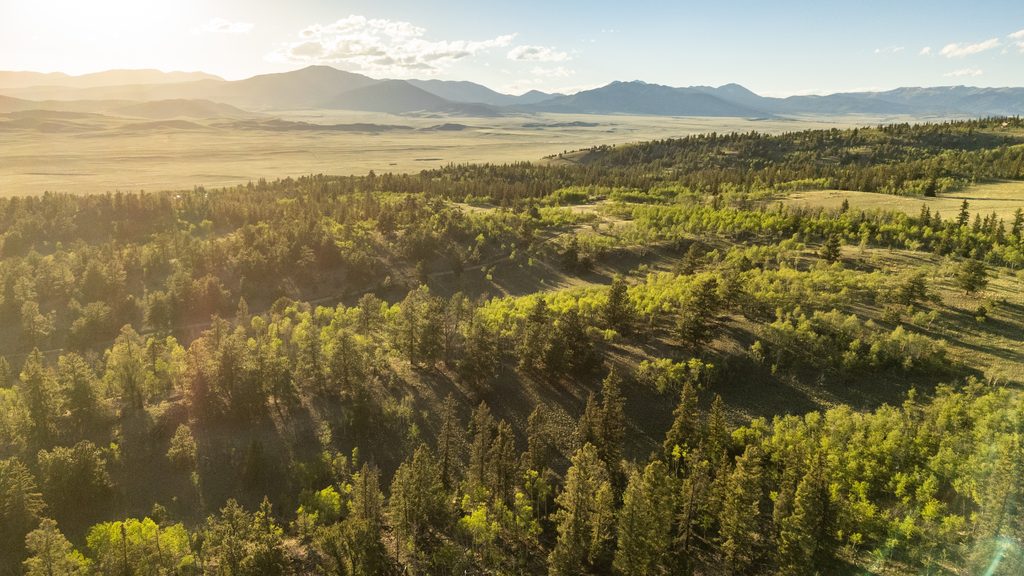
This begs the question- is there a better way? Not easily at the federal level. The deduction is technically offered in exchange for a donation of property rights, and the IRS only considers this donation in terms of market value. McLaughlin has a whole paper on this problem, which she calls the valuation conundrum. Changing this valuation model would require Congress to rewrite the tax code, which is highly unlikely. A more realistic path for valuation improvement lies at the State level, alongside the Federal deduction. Each state sets their own credit formulas, and could theoretically be adjusted to reward high-value conservation directly. This model has already been enacted to an extent- funding programs such as the Colorado Parks and Wildlife’s Habitat Program and Federal purchase programs like USDA’s Agricultural Conservation Easement Program already rank projects by habitat, water, and agricultural value before they commit dollars. Emerging habitat, water, and carbon markets pay landowners for measurable outcomes on top of the easement itself. The appraisal process may always measure what’s lost, but increasingly, the incentives surrounding conservation easements can start to account for what’s protected.
Whether you own land you’d like to protect, are weighing an easement as part of your operational plan, own land under an existing easement, are considering acquisition of an eased property, or are simply curious whether a conservation easement fits your goals, we’d be honored for the opportunity to assist you. Confluence Land Company can walk you through the easement process from start to finish, connect you with certified land trusts and our network of trusted appraisers, as well as help you understand what an easement could mean for your property’s value, your taxes, and your operation for generations to come. If a property is currently eased, we can help you understand the easement’s terms, allowed uses, and effects on salability and value. With Colorado state tax credits reserved years in advance, the sooner you start the conversation, the better. Reach out to our team today through the contact page to discuss your options- we look forward to hearing from you.